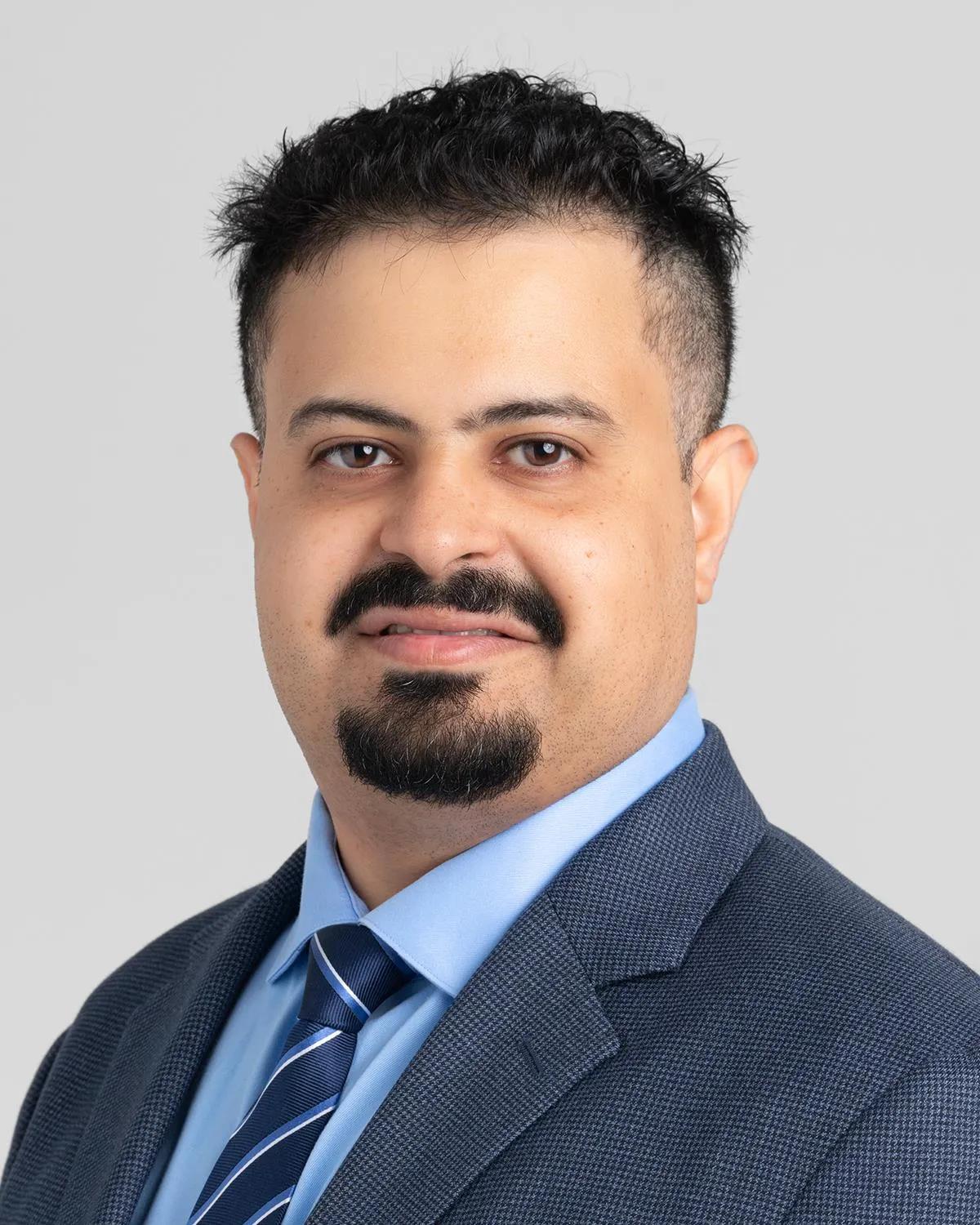
Salem Alfaifi, MD
Radiation Oncology
Highlights
Age Groups Seen
- Adult
Languages
- English
Gender
MaleAbout
Biography
Salem Alfaifi, MD, FRCPC, is a radiation oncologist board certified by the American Board of Radiology and the Royal College of Physicians and Surgeons of Canada.
Dr. Alfaifi completed a postdoctoral fellowship at Johns Hopkins University School of Medicine, an internal medicine internship at Case Western Reserve University, radiation oncology residency training at the University of Manitoba, and an advanced fellowship in complex radiation oncology at Cleveland Clinic.
His clinical and research interests include stereotactic body radiation therapy, stereotactic radiosurgery, thoracic cancers, central nervous system tumors, breast cancer, prostate cancer, and advanced applications of radiation therapy. He has served as Site Principal Investigator for multiple cooperative group clinical trials and has authored peer-reviewed publications and textbook chapters in oncology.
Education & Board Certifications
Education
- Fellowship: Cleveland Clinic, 2024
- Residency: University of Manitoba, 2023
- Internship: Case Western Reserve Univeristy/University Hospitals Cleveland Medical Center , 2018
- Fellowship: Johns Hopkins University School of Medicine, 2017
- Internship: King Khalid University , 2013
- Medical Education: King Khalid University , 2012
Board Certifications
- Radiation Oncology: American Board of Radiology - Radiation Oncology, 2026
- Radiation Oncology: Royal College of Physicians and Surgeons of Canada, 2023
Professional Highlights
- Member of American Society of Therapeutic Radiology and Oncology (ASTRO)
- Fellow of the Royal College of Physicians and Surgeons of Canada (FRCPC)
Awards
- Stereotactic Ablative Radiotherapy (SABR) Canada Travel Award, 2022
Research & Publications
See publications for this provider. (Disclaimer: This search is powered by PubMed, a service of the U.S. National Library of Medicine. PubMed is a third-party website with no affiliation with Cleveland Clinic.)
Industry Relationships
Cleveland Clinic physicians and scientists collaborate with industry to advance medical breakthroughs. These partnerships help commercialize discoveries for public benefit while maintaining scientific integrity. To ensure transparency and minimize potential bias, Cleveland Clinic reviews these relationships and publicly discloses when physicians/scientists receive significant compensation for consulting, serve in fiduciary roles, receive royalties, or hold equity interests related to their work. We manage potential conflicts through approval processes, annual reporting, and targeted management plans.
As of 2026-04-21, Dr. Alfaifi has reported no financial relationship with industry that is applicable to this listing.
In general, patients should feel free to contact their doctor about any of the relationships and how the relationships are overseen by Cleveland Clinic. To learn more about Cleveland Clinic's policies on collaborations with industry and innovation management, go to our Integrity in Innovation page.
Public Health Service-Reportable Financial Conflicts of Interest. Cleveland Clinic scientists and physicians engage in basic, translational and clinical research activities, working to solve health problems, enhance patient care and improve quality of life for patients. Interactions with industry are essential to bringing the researchers' discoveries to the public, but can present the potential for conflicts of interest related to their research activities. Click here to view a listing of instances where Cleveland Clinic has identified a Public Health Service (PHS)-Reportable Financial Conflict of Interest and has put measures in place to ensure that, to the extent possible, the design, conduct and reporting of the research is free from bias.
* Cleveland Clinic physicians and scientists subscribe to the guidance presented in the PhRMA Code on Interactions with Healthcare Professionals and the AdvaMed Code of Ethics on Interactions with Health Care Professionals. As such, gifts of substantial value are generally prohibited.